DRAIN YOU
We live in solitary times. Our “social” online landscape has done plenty to isolate us from the people and world around us. Online platforms have made us ever reliant on their pervasive, digital realms; ones that streamline, commodify, and increasingly simulate human connection. As we scroll reflexively into the abyss of their feeds, they promise a one-stop shop to the outside world. Each of us is made a captive audience for a uniquely distorted house of mirrors.
For those of us who enjoy video games, the online communities most reliant on corporate-run platforms have long frayed in their hellvoid. Hellbent on extracting every ounce of engagement from us, social platforms channel our interactions to be as disposable, impersonal, and inflammatory as possible. They stimulate our dopamine receptors relentlessly but remain futile enough to keep us insatiable.
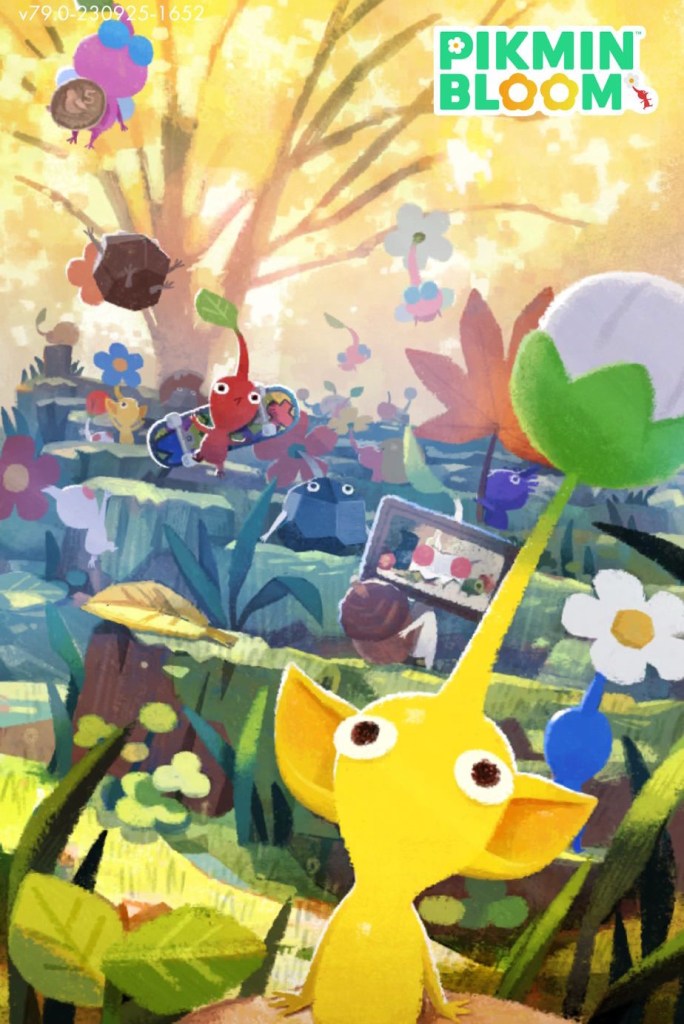
This is a post about Pikmin Bloom, somehow.
COME AS YOU ARE
For the last decade and change, the ex-Google devs at Niantic sought to build apps around a simple conceit: touch grass, nerds. They posited that if we’re going to play games alone, then we might as well play them alone together. With strangers. Staring at the same app. At the same park. Next to a fountain.
Meanwhile, I had grown up enjoying video games as a largely secluded hobby. That isolation was broken only occasionally by jaunts to arcades, N64 couch multiplayer nights as a kid, and Halo LAN parties as a teenager. Destiny and Hydro Thunder Hurricane were the only games I really played online. Gaming conventions and tournaments were nowhere near my radar. Having missed out on the general ARG scene, the 3DS’s StreetPass, and Niantic’s inaugural augmented reality title, Ingress, I had seldom considered the potential for video games to bring people together in shared, physical spaces.
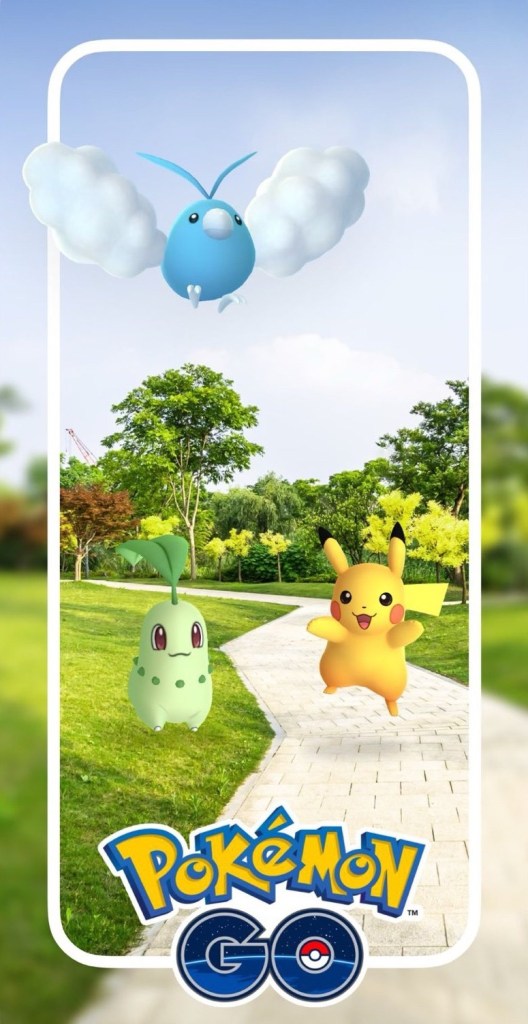
Then on a warm July day in 2016, Pokémon GO upended my perceptions of a lonely medium. It gamified going outside and exploring the world around us. With other people. I thought it sounded pretty dumb.
Not that it was dumb — I just didn’t know that yet.
As an augmented reality app, Pokémon GO encouraged us to stroll around our neighborhoods. It had us interact with real-world landmarks — rebranded as “PokéStops” — for items. We’d swipe to throw PokéBalls and catch the critters lurking about. Then we’d send them to battle at “gyms” and take them over in the most idle “numbers go up” way imaginable. It was fine?
Nonetheless, I found myself in a tourist-packed Seattle Center, bonding with random folks over our shared Pokéxperiences. Together, we appreciated local street art and historic sites that we had never noticed before they were PokéStops. We exchanged tips for power-leveling our Poképosse. We aired grievances that the park was overrun with Pidgeys and Rattatas and too few of the ‘mon we actually wanted. It was communal lightning in a bottle.

Pokémon GO captured our collective imagination that summer. It offered novel ways to see our towns and connect with our neighbors. For players drawn to its communal approach, the appeal endured. For those wanting a more robust game, the novelty wore off quickly. I uninstalled it after a couple weeks.
Regardless, GO had made an impact. Even if it didn’t hook me as a game, it at least sold me on its multidimensional ambitions. I admired its value as a conversation starter and as a sightseeing guide to my own city. More broadly, I appreciated GO’s glimpse into the potential for games to bridge the divide between our real and digital worlds. I was excited to see how they can help motivate us to gather outside and explore our hobby together in fun and meaningful ways.

ENTERTAIN US
I paid little mind to Niantic’s projects in the years that followed. I was aware it dabbled in other licensed AR apps — like the short-lived Harry Potter one — which I dismissed as an opportunistic repackaging of the concepts and mechanics of its preceding work.
Fast forward a half decade-ish. While hanging out with some of my gaming enthusiast friends, I was taken aback when they introduced me to a newer Niantic game: Pikmin Bloom. They had been enjoying it but needed someone to join and contribute to the team’s weekly step total and flower planting challenges. Knowing almost nothing else about the app, I thought what the hell, why not.

So here’s the most cynical version of Bloom’s pitch: The game gives you a bunch of Pikmin buddies who wear silly costumes and they follow you around while the app surveils all your fun little adventures together. Of course, your phone is doing that anyway — with or without the Pikmin — so you might as well enjoy the damn Pikmin.
Realistically, Pikmin Bloom is a pedometer app at least as much as it is a game. It’s an entirely collaborative experience, as well. There are almost no competitive dynamics outside of one friend and I vying for who can lead our team’s step count each week.
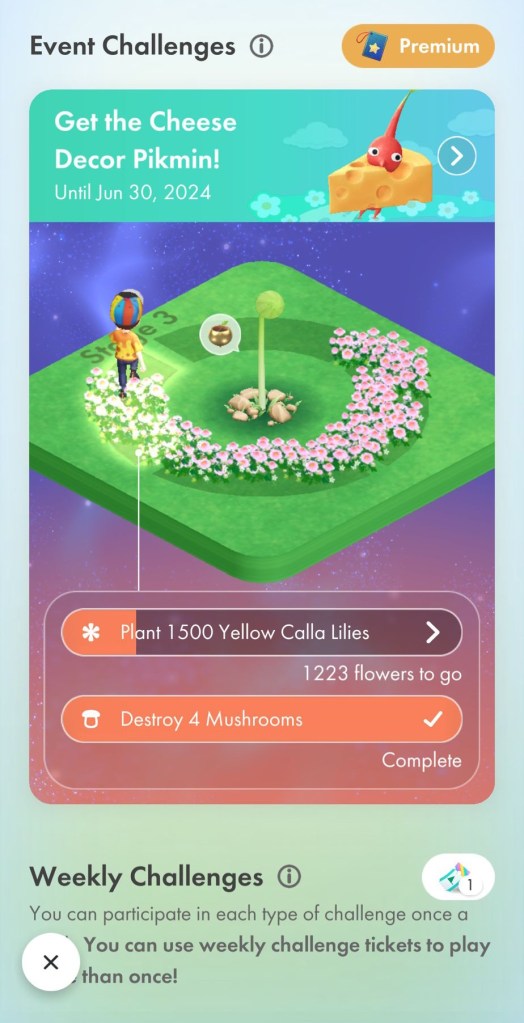
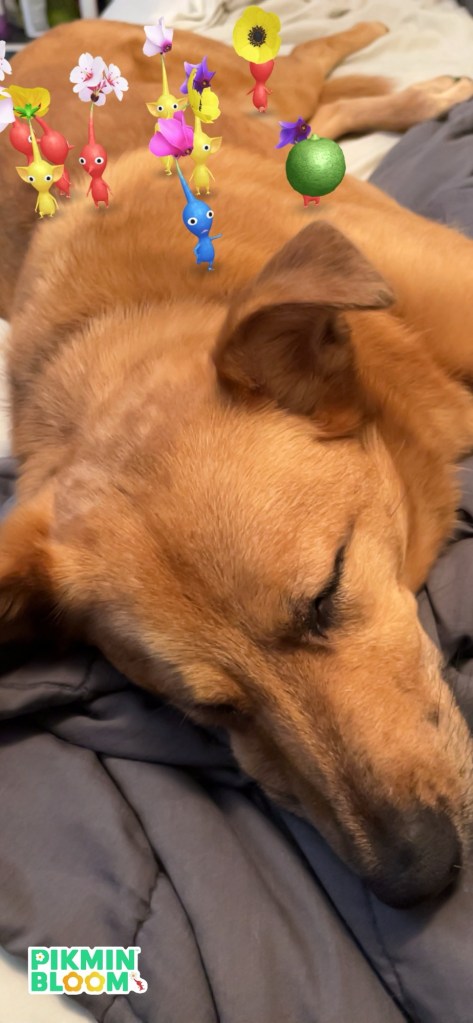
Bloom’s hook is a leisurely hook, albeit a stealthily convoluted one. Walking progresses just about everything you do in the game. As you explore, you reveal seedling pots along the way. You can collect those and help them sprout with each step. Enough steps and a new Pikmin will emerge. At various landmarks you pass, you’ll find flowers and fruit which produce nectar that you can feed to your Pikmin and they will grow petals which you can pluck from their cute little heads. You collect those petals and drop them as you walk to plant flowers around town. All these things are fairly frictionless, and honestly, the greatest challenge is simply remembering to do them.

Certain landmarks host recurring battles with mushrooms, which also produce nectar for some reason. You can command your Pikmin army to venture out and attack them. Other players can also join to help destroy the fungi faster. Additionally, there are color/type advantages where certain kinds of Pikmin are more effective against certain kinds of mushrooms. There’s some strategy there, perhaps, but not a lot.
As for why the Pikmin are fighting the mushrooms to begin with? It’s never explained, but I assume it’s some sort of Gravemind situation.
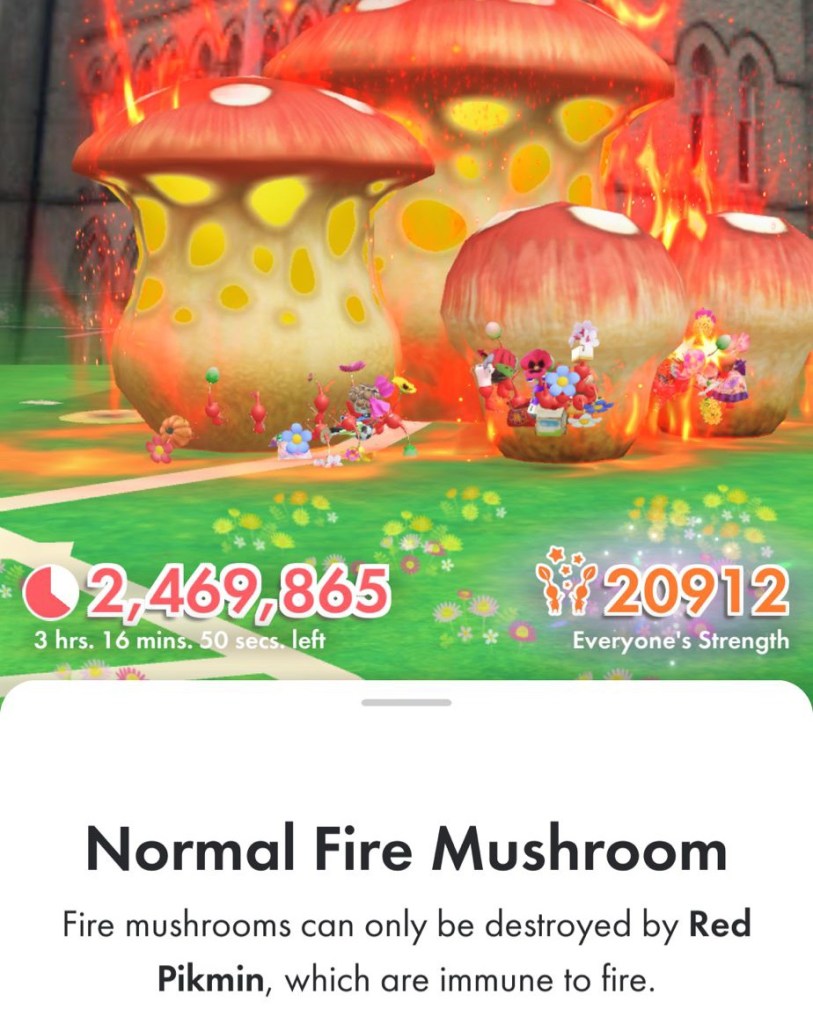
You also have friendship levels with your Pikmin, which raise when they chug nectar. Eventually they evolve to don themed decor from the locations where you originally found them. Those upgrades enable your Pikmin to drop more petals and kill mushrooms more efficiently. And sending them to battle with petal sprouts on their heads (without plucking them first) makes them deal slightly more damage. I’m trudging into the weeds at this point but that’s about the gist of the various verbs Bloom has you do.

Anyway, do enough of all the things and you can level up for the privilege of doing them morer and betterer, and with a growing Pikmin army at your side. Each month also brings new progression challenges where you get rewards by completing a series of step count, Pikmin growing, mushroom slaying, and flower planting goals. It’s a surprisingly satisfying cycle and a relatively non-predatory one all things considered. Or at least it was for most of the time I played it (I’ll get to that). I probably spent a grand total of $30 on Bloom over the last couple years. Not bad for an app I used every day.
IN BLOOM
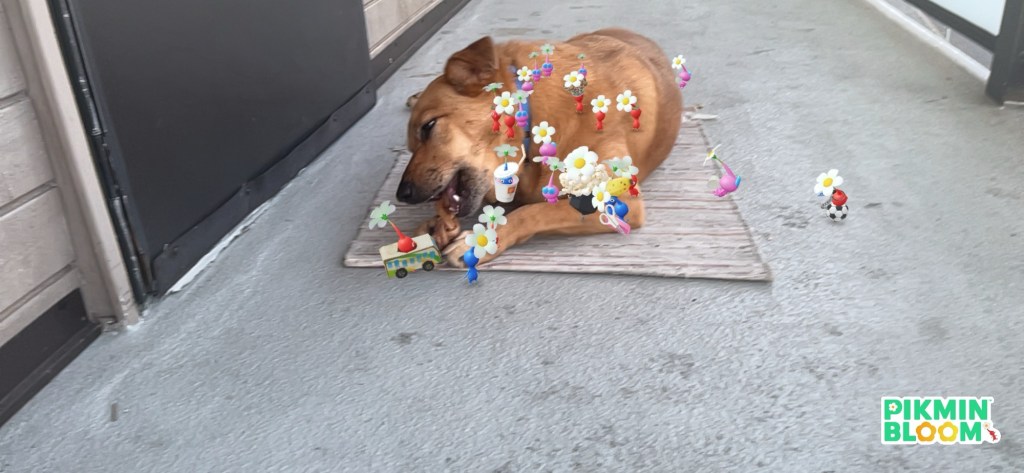
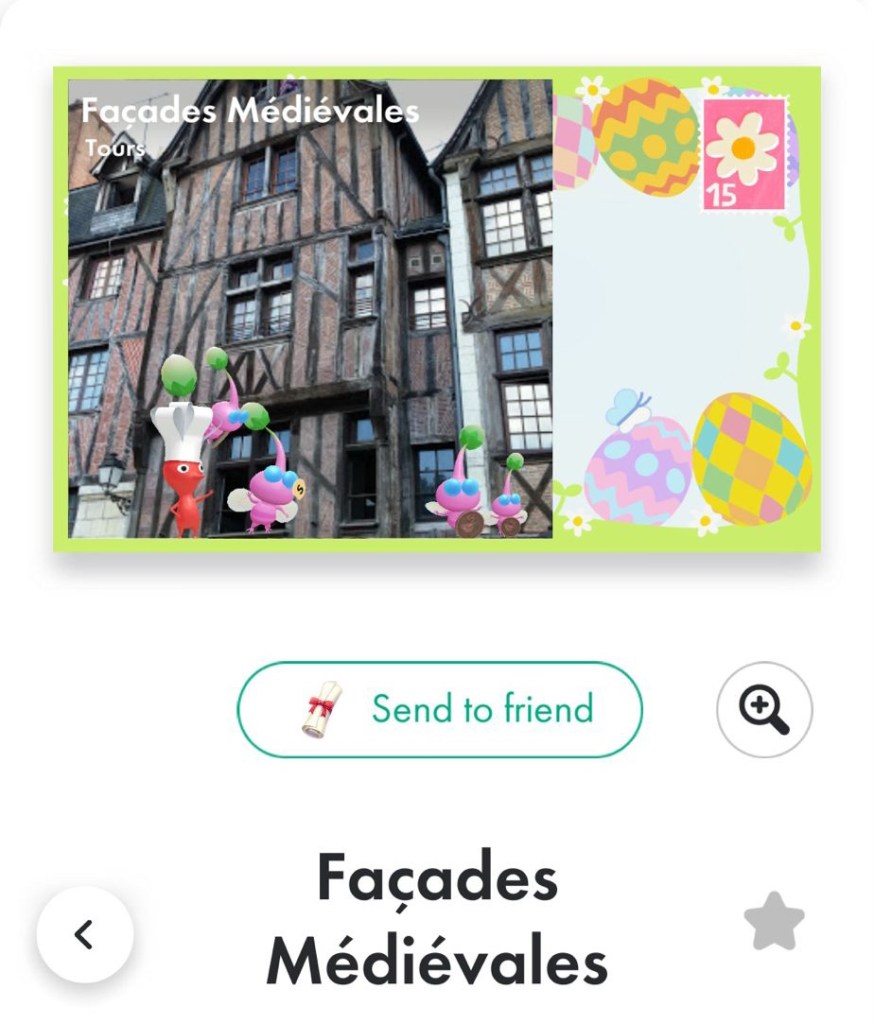
The most rewarding aspect of Pikmin Bloom is its location-based collectibles. The app follows Niantic’s legacy of integrating real life landmarks into its GIS-sourced game spaces and fashions different mementos to collect from them. At this point, I’ve amassed a vast number of relics commemorating many of the places I’ve visited. These include themed Pikmin from specific shops, museums, and restaurants. They also include postcards depicting various real-world locales. These are acquired from sites of vanquished mushrooms, exchanged with petals at landmarks, and sent between friends to share cool shit from their respective adventures.

At first, the landmark-based relics were a novel way to appreciate the charms of the neighborhoods I’ve lived and hung out in around Seattle. My postcards document various facades, signs, and sculptures just off the beaten paths I tread every day. One was of a mural on the side of a Walgreen’s that I had never noticed despite years of stopping in for Arizona iced teas and dog treats. Many Pikmin hailed from my favorite bars and restaurants, and plenty from mediocre ones as well. My Pikmin came from lots of different businesses, actually. Nail salons and law firms. Bus stops and parks, too. And probably a mafia front or two.
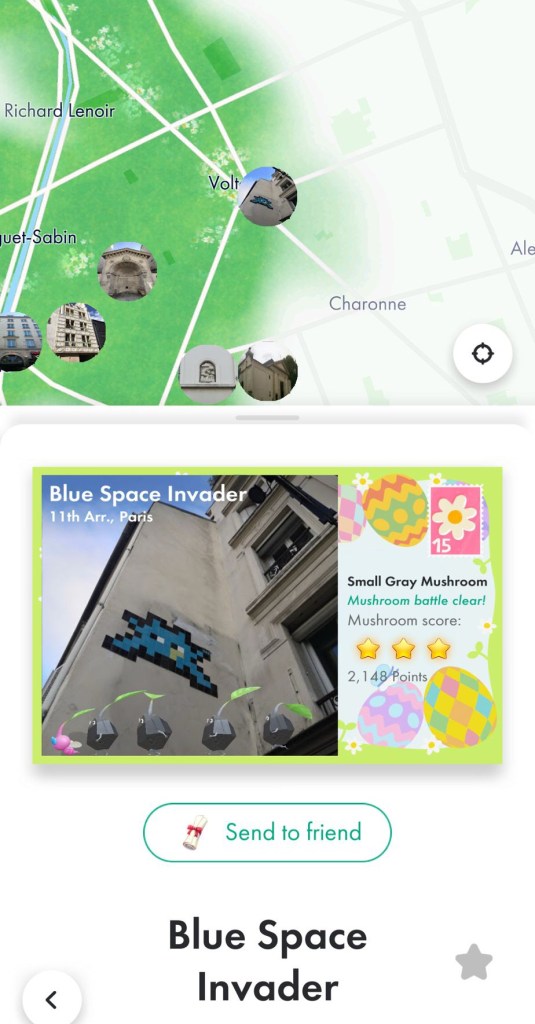
When I moved half-way around the world last year, Bloom’s relics took on a new significance. They helped me acclimate to a new chapter of my life, charting many intricacies to discover in my new habitat. They served as digital keepsakes as I’ve explored villages, towns, and cities, enriching my travels with morsels of their unique histories and cultures. They’ve also highlighted unique points of interest as I’ve traversed the cobblestone streets, medieval walkways, and market squares.
As a time capsule, Bloom grew more important still. Last year, when I visited the small town I grew up in, the app’s landmarks highlighted all things new and familiar, charting the story of a place that — for all its new park trails and coffee stands — has stayed every bit the town I remembered it from decades ago.

Practically speaking, Niantic built much of its landmark database years earlier with help from the Ingress player community. It’s also questionable how diligently it has been updated since. As a result, many landmarks are charmingly outdated. Some wistfully so.
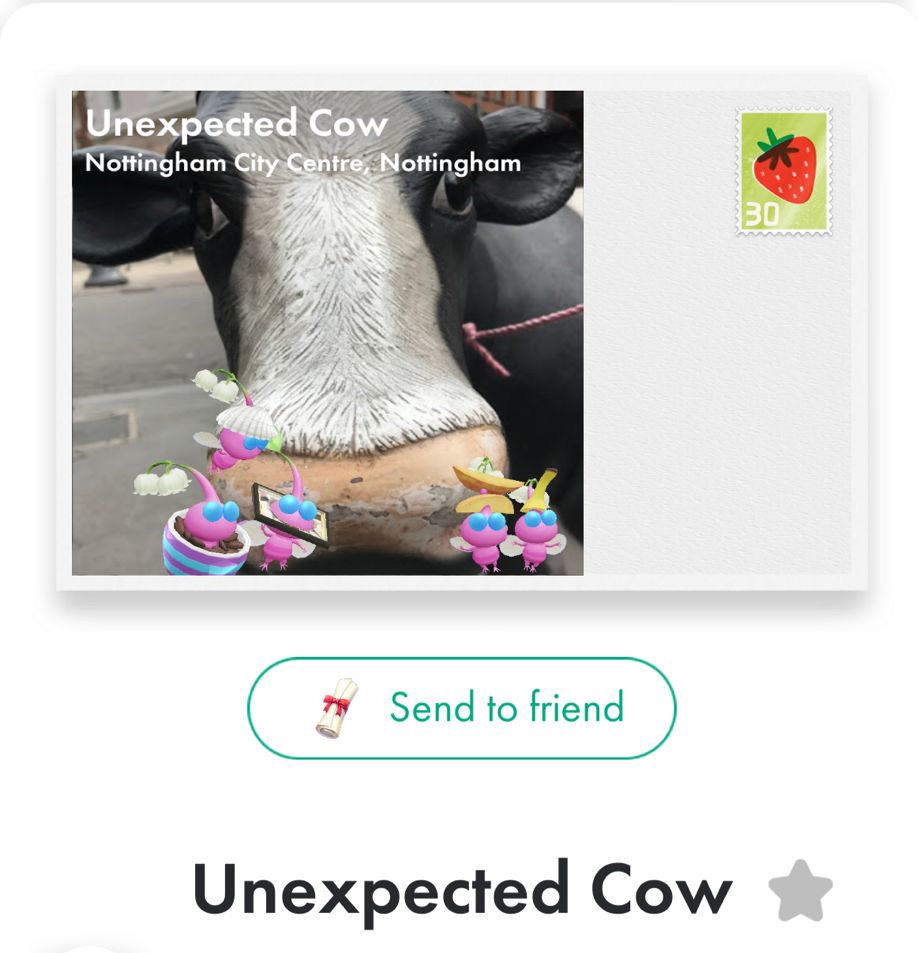
Perusing my collection of Pikmin and postcards, I found one from a café that had been replaced by the veterinary clinic we used to take our dog to when we lived in Capitol Hill. There was one from the long-closed Minnesota-themed bar and pizza joint near my old apartment where I used to soak up the Ballard brews and Ballard Ave booze on most weekends. There was also one from my favorite former coffee shop in the University District: a lost relic of the city’s ‘90s grunge heyday. It closed shortly before the pandemic. I think it’s a bubble tea place now.

The real gut punch came from a postcard my buddy sent me of Grizzled Wizard, a tiny dive bar that was once across the street from my favorite Seattle music venue. Back in the day, my friends and I shuffled into the GrizzWiz* like clockwork after countless nights of amazing funk shows. It was long gone before Pikmin Bloom came out but somehow it endured as a mushroom battle spot.
I loved that place. We always saw the same regulars hanging out there (requisite for any decent bar). It had a single MAME arcade cabinet where we sometimes played Burger Time and Galaxian ‘til last call. There was only ever one bartender and no kitchen staff, yet they served inexplicably excellent toasted cheese and jalapeño sandwiches. It had been closed for over five years and yet here it was, casting its magic over me once again.
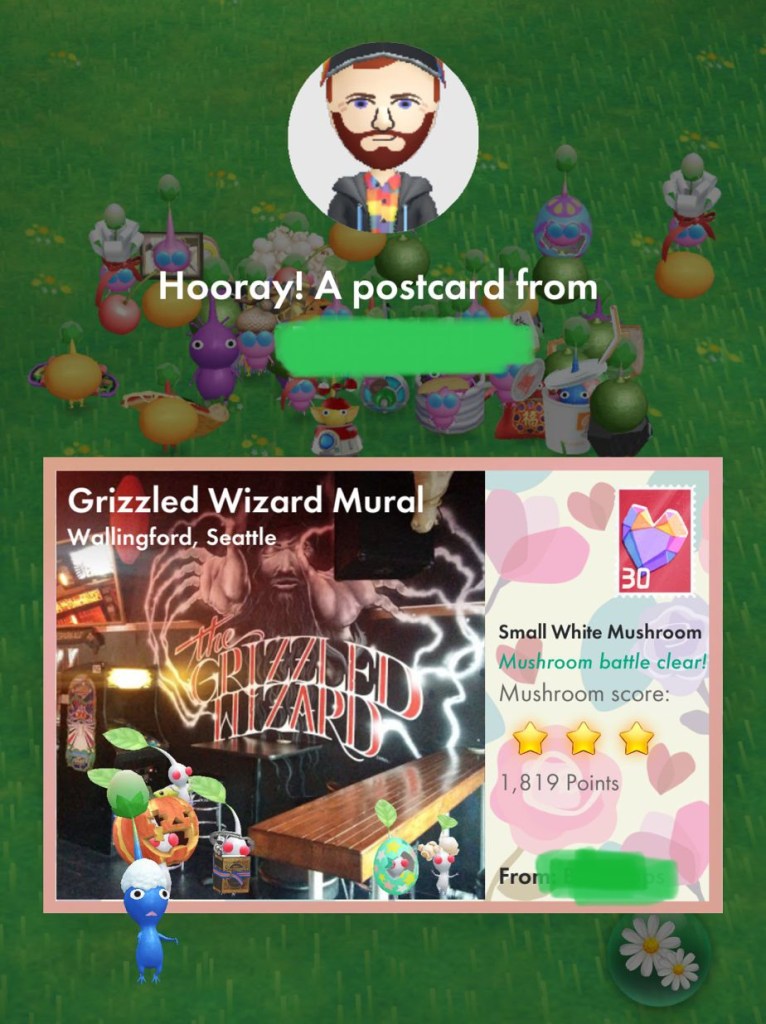
In this way, Bloom’s Pikmin and postcards embody fragments of my past. They’ve helped immortalize many of the real places that meant the world to me even as they’ve been lost to time. They commemorate disparate threads in the tapestry of my time in Seattle, spent with the people who’ve made my life what it is. They’re reminders of the places that brought us immense joy. The places that hosted many of our nights out and caused many of our hangovers. The places that helped soaked up the booze with square-cut, midwestern-style pizzas and their layers of pepperoni and mac n’ cheese. The places where we discovered white lattes and Sega’s GoldenEye 007 pinball machine. The places where my fiancée and I confronted some of the more challenging aspects of dog ownership. And the cocktail bar where we first met.
It’s an unexpected comfort that in some small way — by the grace of Niantic’s negligence — these places still live on.
MAYBE JUST HAPPY
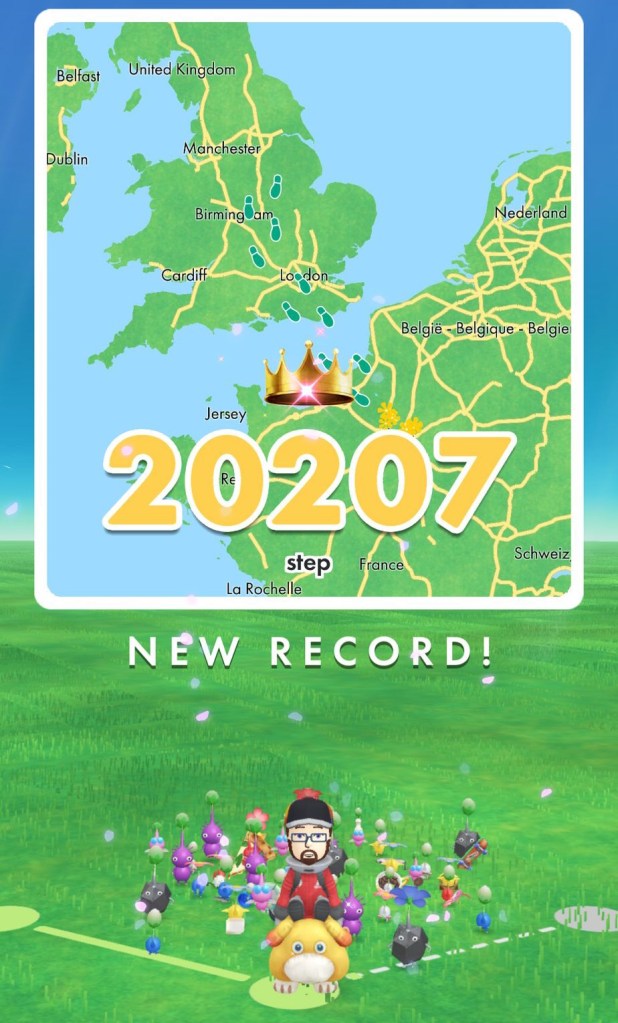
I haven’t played Pikmin Bloom in several months. For all I know, the game may no longer exist as I’ve described it. Just as places change, and people change, I suppose so do mobile apps. Over time, Bloom’s experience degraded noticeably with each update. The progression goals grew stricter and the requisite petals grew more scarce, all while pay-to-win incentives sprouted to fill the gaps. The most egregious update made the rewards wheel spin absurdly fast, ripping away the fun of trying to make it land on the items we wanted.
These changes evoked a Niantic that was struggling to make the experience continue to work. With each tightening of the chain, my friends insisted that Bloom used to be better. But for me, it was still good enough for long enough to leave a lasting imprint. I’m very grateful to them for introducing me to it.
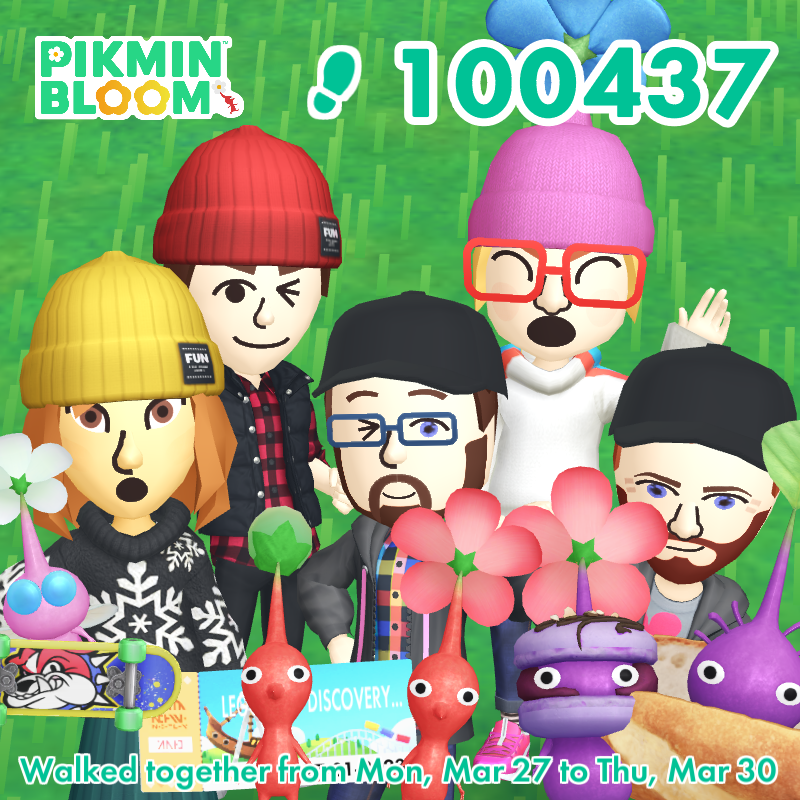
The bottom fell out when Niantic announced it would sell off its games division — including Pokémon GO, Pikmin Bloom, and Monster Hunter Now (which I totally would’ve tried had I known it existed earlier) — to the Saudi government-backed Scopely, a famously more shrewd mobile game publisher.
With the acquisition, the company assured players that its development teams would stay in tact and little else would change. Maybe that’s true. Or maybe everything changed. Perhaps even for the better. As it is, the suspense hasn’t been killing me enough to find out. I’m at peace with closing this chapter of my Pikmin adventures. The app has already given me more than I could have ever expected from it.
Inspired by Niantic’s work over the last several years, I was curious to explore other ways gaming’s communal potential manifests in the real world. And it’s been heartening to see all the game communities that flourish outside of the online hellvoid.
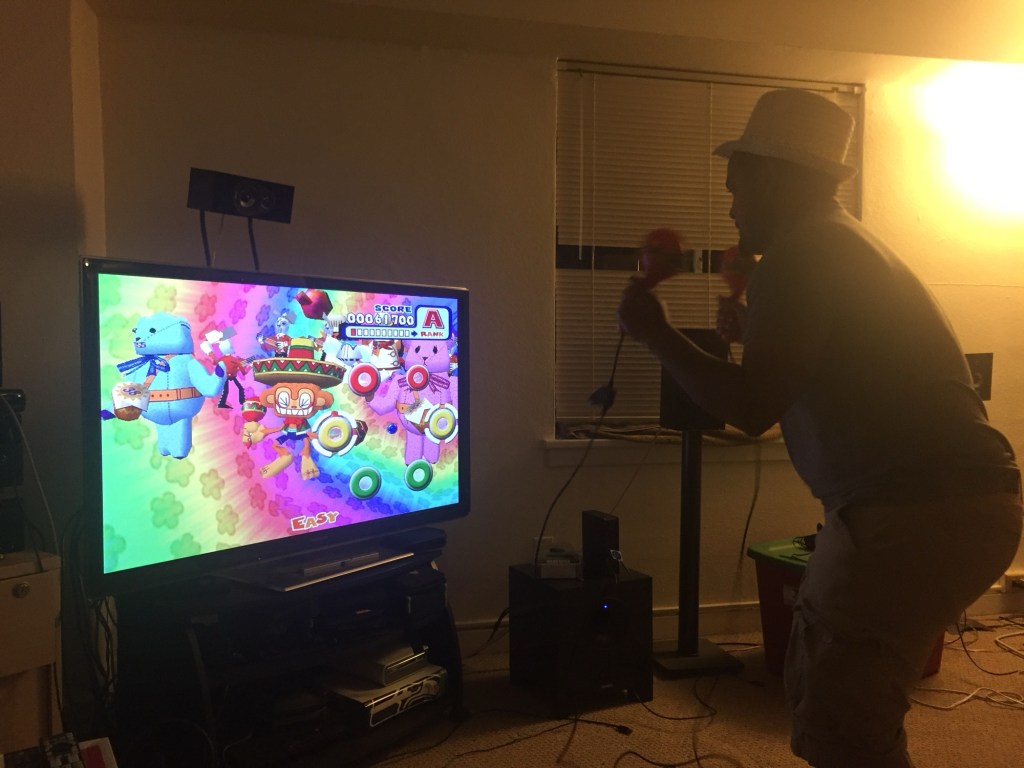
Since my experiences with Pokémon GO, I’ve made more conscious efforts to explore the overlap between gaming and physical spaces and I’ve found more ways to share that enthusiasm, face-to-face, with people in real life. Shortly after Pokémon GO was released, I started going to video game conventions, where I’ve met many of the incredible people who help drive those communities forward. I started hanging out at arcades more often. I introduced my non-gaming friends to party games like Samba de Amigo, Headmaster, and Keep Talking and Nobody Explodes; all of which became post-night out rituals for us. I met other incredible friends at video game-themed quiz nights. I even joined a choir where we predominantly performed music from video game soundtracks.

Even now — on the other side of the pond — I often chat about games with regulars at my local pubs, lending an ear to their nostalgia for the ZX Spectrum and exchanging our moral interpretations of the events in Clair Obscur: Expedition 33. I get to explore gaming museums and some of the best arcades I could ever imagine. I meet new indie devs and old school magazine journos at various gaming events. I finally get to see friends with whom I’ve been recording Sega-centric podcasts for years. Video games are neat, and I find them especially rewarding when we can explore our interests and experiences together in person, outside the voids of our social media feeds.


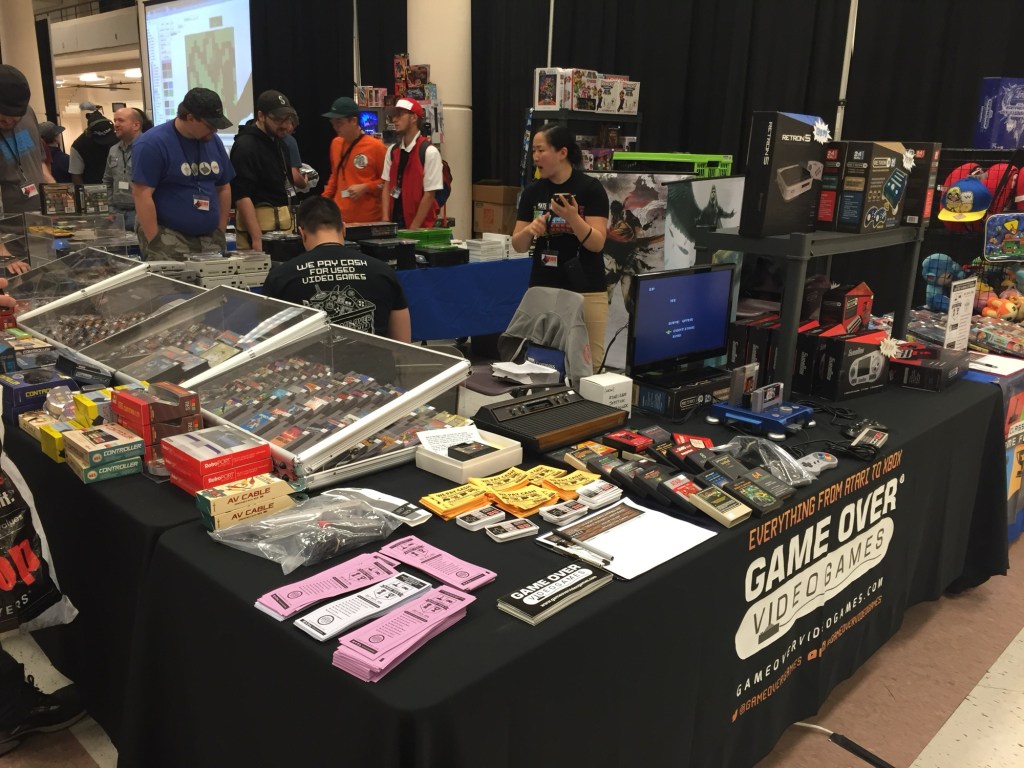
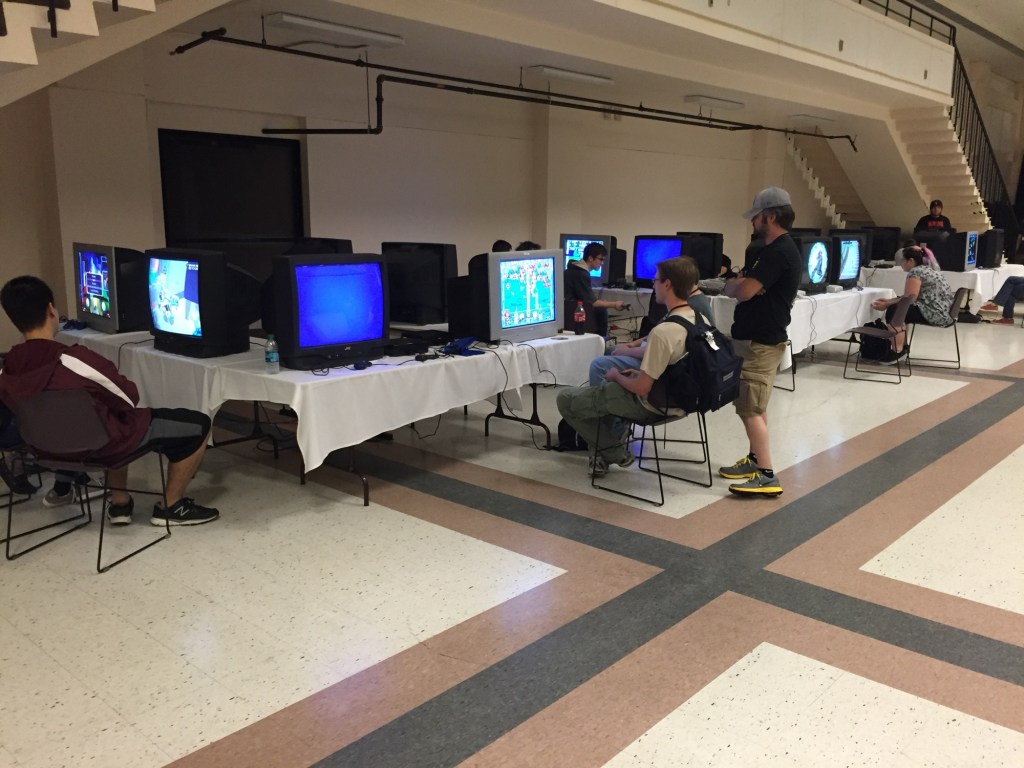
Pics from my first video game convention, Seattle Retro Gaming Expo 2016
In my travels with my Pokémon and Pikmin, Niantic has done far more than gamify going outside: it helped ignite my curiosity to explore a hobby more tangibly and meaningfully.
In the real world, Bloom’s relics have gifted me a travelogue of my experiences across time and space. They’ve helped chart places I’ve been and how they’ve changed, the distances I’ve traveled since, and the curiosities I might discover next. They are personal mementos — not only of places endeared to me — but of the wonderful people I’ve discovered them with along the way.

Thanks for reading! You can follow me in the social hellvoid if you’d like but we should all probably go touch grass now.
Cheers!
POST SCRIPT
Seriously. Go for a walk or something.

 The Virtua Planet